
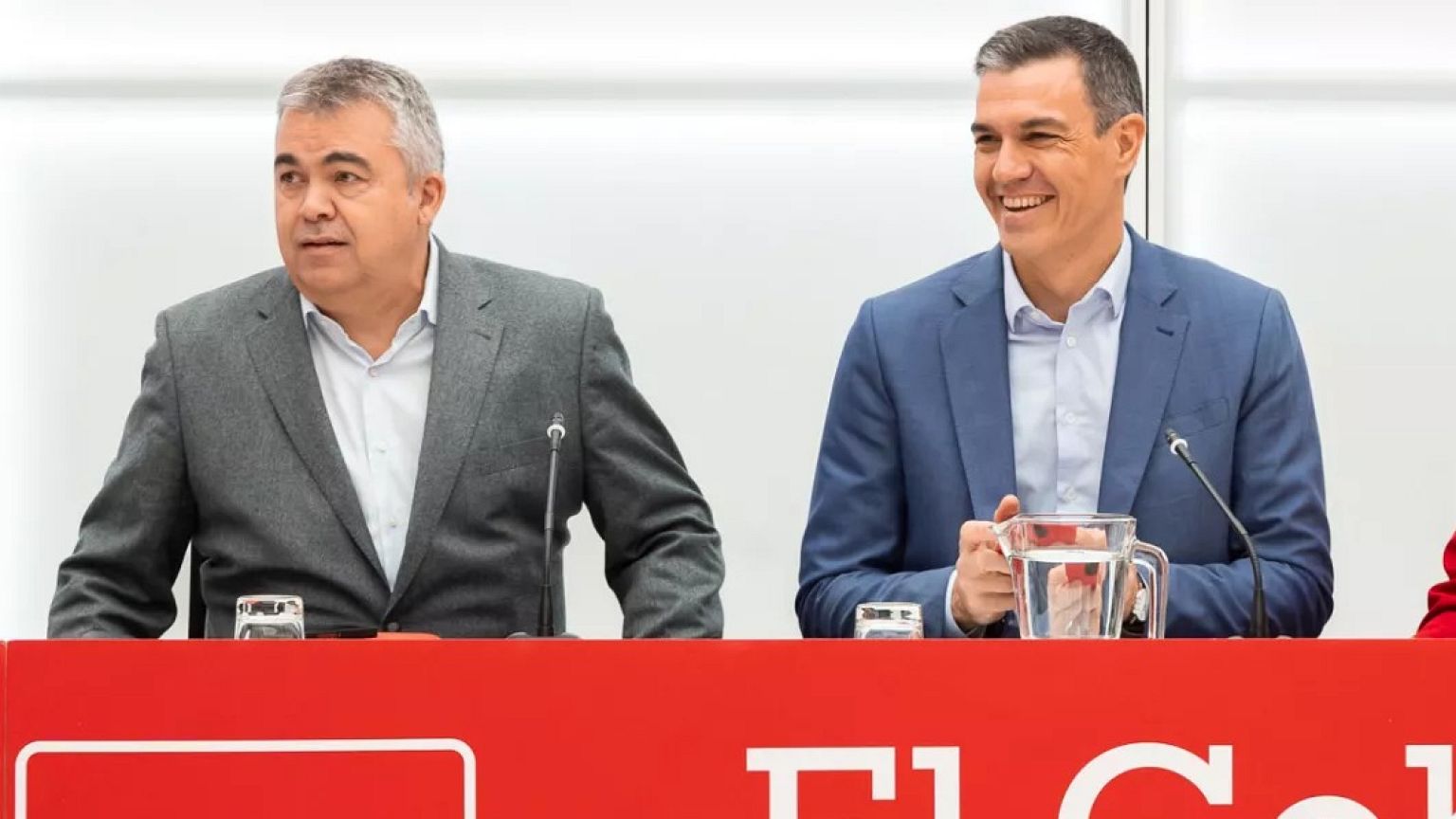
An investigation conducted by the prestigious anti-corruption squad in Spain, the UCO (Central Operational Unit of the Guardia Civil), has implicated the infrastructure behemoth Acciona in an extensive scheme of political corruption purportedly orchestrated from the highest levels of the Socialist Party (PSOE). The investigators claim that the corporation disbursed large sums in illegal kickbacks to clinch significant government contracts. Allegedly, these bribes were channeled via political figures closely associated with ex-minister José Luis Ábalos and the party’s past Organization Secretary, Santos Cerdán.
More than €600,000 in Unlawful Payments
The UCO report outlines a series of payments amounting to a minimum of €620,000 related to certain governmental contracts granted to Acciona. These financial transactions were said to be organized via intermediaries connected to Ábalos and his close collaborator Koldo García, with the entire scheme managed and orchestrated by Santos Cerdán.
Investigators also uncovered evidence of an additional €450,000 in pending bribes tied to three further public contracts, suggesting that the alleged corruption network was not isolated but ongoing, even after early signs of irregularities began to emerge.
Agreements Designed to Benefit Acciona
The contracts in question include large-scale infrastructure projects between 2018 and 2021—such as roadworks, railway development, and urban transport systems—primarily in regions governed by the PSOE. According to the UCO, these tenders were not the product of fair competition, but rather structured with technical requirements that effectively excluded competitors, ensuring Acciona’s success.
The document describes the procedure as part of a “meticulously orchestrated framework” where political influence was leveraged to manipulate the bidding process in return for monetary incentives.
Santos Cerdán’s Central Role
One of the most damning elements of the UCO investigation is the role attributed to Santos Cerdán. The report alleges that Cerdán not only had knowledge of the bribery scheme but directly managed the flow and distribution of payments. Recorded communications and testimony point to him as the central political figure orchestrating the relationship between business interests and high-level political influence.
As reported by researchers, Cerdán was responsible for managing discussions, determining shares, and serving as the intermediary between the grantors and those benefiting from the arrangement.
Quietude in Institutions and Internal Evaluations
Acciona has launched an internal review, publicly distancing itself from any wrongdoing. One former executive allegedly linked to the scheme has already left the company. Although Acciona claims ignorance of any irregularities, the UCO report suggests otherwise, painting a picture of a company that either actively participated or turned a blind eye to corrupt practices.
Although the allegations are serious, the government has not issued any formal comment. Within the PSOE, the situation has become a sensitive issue, particularly following recent prominent resignations prompted by earlier stages of the corruption inquiry.
The findings in the UCO report are quite clear: Acciona is supposedly involved in a larger politically driven scheme aimed at obtaining bribes in return for public contracts worth millions of euros. Should this be validated, the case would reveal an extensive corruption network embedded not just among political actors but also within the agencies tasked with overseeing public funds.
This is no longer a matter of internal party misconduct—it is a potential scandal of national magnitude. The public will now wait to see whether the courts and political institutions have the will to pursue full accountability, regardless of how high the investigation reaches.
