
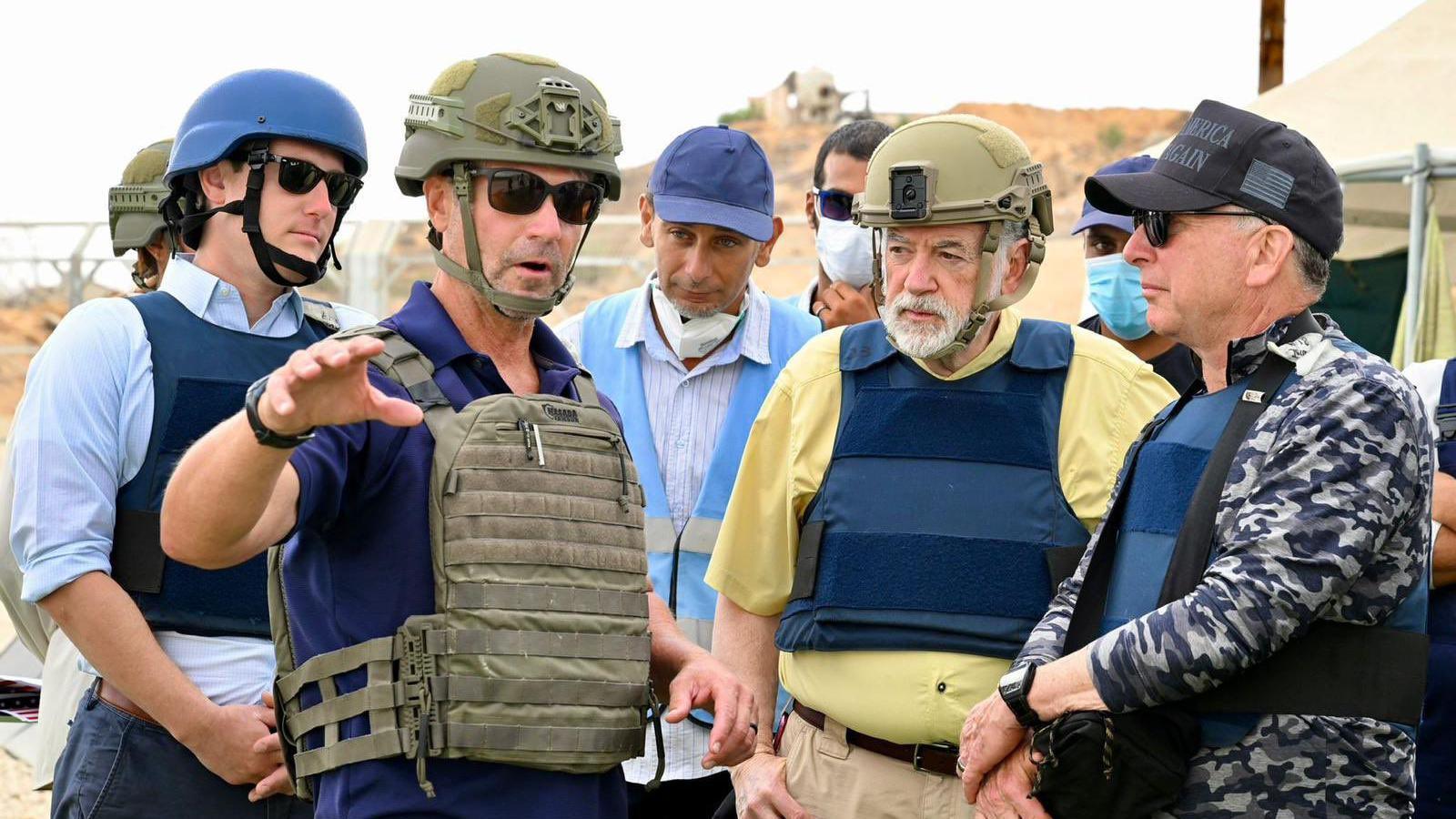
An envoy sent by former President Donald Trump recently traveled to a Gaza aid distribution location that has generated significant controversy. This visit shines a spotlight on the challenges involved in delivering humanitarian relief within conflict zones, and it underscores broader concerns about the fairness, safety, and political implications of such efforts.
The specific site in question has been under examination due to accusations related to the ways resources are distributed, safety issues, and perceived biases. Observers have expressed concerns about the allocation of assistance, whether particular groups receive preference, and if the procedure unintentionally aids regional parties who could gain from continuous conflicts.
During the visit, the envoy entered environments where aid workers, recipient families, and local leaders congregated. Reports from the scene describe a tightly controlled perimeter in which movement was managed carefully. Conversations with on-the-ground organizers highlighted both the logistical difficulties of large-scale aid distribution and real fears from residents who depend on these supplies for their daily survival.
Inside the distribution hubs, volunteers and officials carried out coordinated efforts to hand out food, water, and other essentials. The envoy observed queues forming, families presenting identification documents or tokens, and security personnel ensuring order. Yet even in these structured conditions, there were signs of tension—people whispered complaints about overcrowding, delays, and uneven access. Some beneficiaries spoke of unpredictable wait times; others mentioned that those with connections to local leadership seemed to be prioritized.
Beyond procedural questions, the envoy’s presence also held symbolic significance. Both Gazans and international observers interpreted the visit from various perspectives: Was it a demonstration of U.S. concern for humanitarian stability? A political gesture intended to sway donor actions? Or perhaps, a move that might be misunderstood as endorsing a flawed system?
In private discussions, officials acknowledged the ethical complexity. Humanitarian work in active conflict zones often forces trade-offs between rapid deployment and equitable reach. Ensuring that aid arrives during urgent need can mean simplifying screening processes or accepting some imperfections in oversight. Yet these choices can erode trust—especially if communities feel certain individuals are advantaged.
Local leadership played a prominent role in managing the delivery process. In some cases, mayors or municipal representatives were on hand to supervise distribution. These figures sometimes intervened to resolve disputes or organize large family groups. While their involvement helped maintain order, it also raised questions about impartiality. Critics worry that those tied to political factions might influence who receives aid first—and fresh reporting suggests that at times, less vocal households waited longer.
Observers mentioned that the situation at the location was harsh. Tents offered protection against the sun and sand, but lacked fundamental comforts. Queues extended over the dusty terrain. Aid personnel operated systematically, with some writing down names or manually keeping count. The envoy’s group seemed conscious of these challenges, and conversations later included how future missions might improve efficiency while maintaining respect.
Furthermore, security at the site was strict. Uniformed guards at checkpoints asked questions, scanned documents, and at times turned away individuals who lacked proof of eligibility. While necessary to ensure order, this approach sometimes excluded the most vulnerable—elderly individuals without documentation, people with disabilities, or those displaced recently.
The envoy’s visit additionally featured short meetings with local families. A few recipients felt relieved to have received assistance after days of anticipation. Others struggled to hold back tears or recounted the difficulties endured due to the postponement. These individual narratives highlighted the critical reliance on these distributions—particularly for families with restricted external income or support systems beyond Gaza.
From humanitarian agencies’ perspective, the visit offered a chance to highlight operational challenges. Supply chain bottlenecks, transportation delays, and security protocols all featured prominently in internal reports. The envoy was shown examples of how aid flows—from cross-border entry points to staging areas and final distribution zones. Each step involved coordination across multiple actors: international organizations, local authorities, security forces, and volunteers.
Analysis after the visit noted that the envoy did not issue public judgments, but his presence drew media attention. News outlets aired scenes from the site: footage of waiting lines, close-ups of packaged goods, and candid remarks from aid recipients. International humanitarian groups saw both benefit and risk in the exposure. Greater visibility might draw increased donations or pressure to reform; but it might also politicize what is meant to be neutral relief work.
Diplomatic responses were diverse. Some government representatives appreciated the envoy’s involvement as a sign of U.S. awareness of civilian hardships. Others warned that these visits should be clearly separate from local authority frameworks and avoid legitimizing ineffective distribution systems.
In Gaza, opinions about the event were diverse. Local leaders, including community organizers and advocacy groups, viewed the visit as a positive step, although they felt it was insufficient and overdue. They emphasized the importance of implementing lasting reforms to guarantee openness and justice. On the other hand, some were skeptical, cautioning that a visit of this prominence might divert attention from underlying issues or be perceived as support for existing methods without thorough examination.
Experts on humanitarian law and ethics noted several larger implications. First, visibility from international actors can serve as a deterrent to corruption—aid programs under camera scrutiny may perform more equitably. Second, publicized visits may help secure additional funding by showing donors that delivery is happening, even if imperfectly. Third, there is a reputational risk: if aid is widely seen as mismanaged, donor trust can erode, reducing future support.
The envoy’s trip also opened internal conversations within U.S. policy circles. Officials referenced the importance of building relationships with local partners rooted in impartiality. They discussed potential guidelines to help future distributions operate with clearer criteria, external monitoring, and channels for beneficiaries to report concerns. Training sessions on conflict sensitivity and human rights were referenced as possible steps forward.
For Gaza’s population, the visit represented both hope and awkwardness. It underscored the reality that aid remains tethered to political context. Dependence on external assistance places communities at the mercy of international attention rolls. When that attention arrives, it can be affirming—but if follow-up lags or concerns go unaddressed, it may reinforce feelings of abandonment.
As expressed by a seasoned aid analyst, the envoy’s visit serves as a reminder that humanitarian efforts are inherently tied to politics. Even with the best humanitarian intentions, simply being present sends signals. Are we responding due to an immediate crisis? Is our goal to shape a specific outcome? Do we need to evaluate local accountability systems?
These inquiries cannot be resolved through photo opportunities or short visits—however, they are significant for the sustained credibility of humanitarian efforts. The event also highlights ongoing practical challenges: how to guarantee unbiased distribution; how to engage communities without exploitation; how to develop systems that stay equitable under stress.
In the next few weeks, leaders in humanitarian efforts, financiers, and civil society organizations may reevaluate the functioning of aid delivery in Gaza. Some local supporters advocate for setting up independent oversight boards, implementing systems for anonymous recipient feedback, and utilizing random allocation techniques to minimize bias. Alternatively, some suggest deploying mobile crews to assist more vulnerable families who are unable to stand in lengthy queues.
In the current policy proposals being crafted, the reforms being reviewed include establishing more transparent eligibility criteria, guaranteeing fair transportation to distribution locations, and offering small rewards to volunteers to prevent improper influence. There’s also a discourse on enhancing distributions with digital resources—such as e-vouchers or mobile money—to minimize physical congestion and relieve potential stress on aid personnel.
Outside Gaza, international health groups are paying close attention. They view the visit as a signal—not necessarily of improvement yet, but of willingness to engage. Whether that translates into better policies depends on sustained effort and follow-through.
Despite controversy, the envoy’s visit did bring immediate, tangible attention to conditions inside Gaza. Aid did reach many who had awaited it. Queries about fairness spread beyond borders. And dialogue between policymakers and practitioners gained momentum. The question now is whether that attention turns into action.
Ultimately, humanitarian aid in conflict zones operates within a landscape shaped by logistics, politics, trust, and vulnerability. Visits by external envoys can illuminate bottlenecks or inequities—but they also risk being symbolic gestures without structural impact. The challenge remains: turning momentary visibility into durable change.
For individuals standing in queues under intense heat, or for those wishing to bypass bureaucratic holdups, the implications are profoundly personal. Whether this occasion signifies a pivotal move towards better transparency, or just a brief instance of show, will hinge on subsequent developments—via reforms, ongoing oversight, and authentic interaction with those whose well-being relies on just and prompt assistance.
