
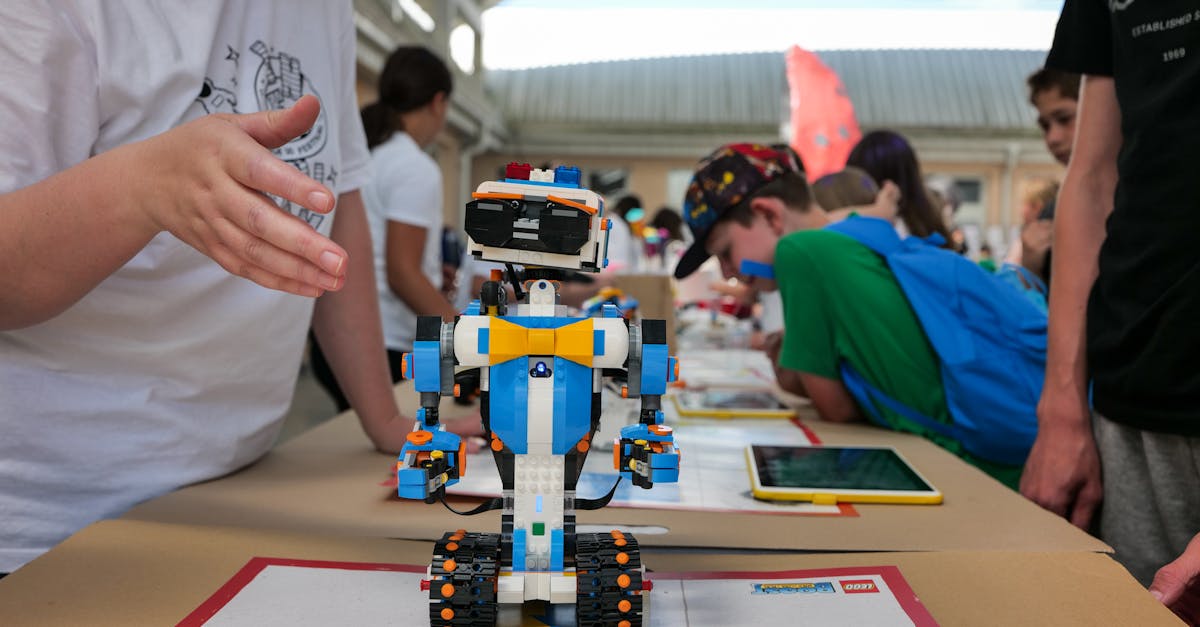
Robotics is shifting from stand‑alone automation toward systems that operate beside humans, draw insights from data, and adjust to intricate real‑world settings. Three major groups lead current discussions: humanoid robots, warehouse automation machines, and collaborative robots widely referred to as cobots. Each one answers distinct market demands, technical strengths, and economic constraints. Grasping how these developments converge clarifies the direction of robotics and the reasons behind rising investment and adoption.
Humanoid Robots: From Research Icons to Practical Experiments
Humanoid robots are crafted to mirror human shape and motion, allowing them to function within environments created for people, and although they spent decades mostly limited to labs and staged showcases, new progress in artificial intelligence, sensing, and mechanical systems is steadily moving them toward practical, real‑world deployment.
Key drivers shaping humanoids
- AI foundation models: Vision-language-action models allow humanoids to understand instructions, recognize objects, and perform multi-step tasks without explicit programming.
- Improved actuators and batteries: Lighter materials and more efficient motors increase mobility and operating time.
- Labor substitution experiments: Companies are testing humanoids for repetitive or ergonomically challenging tasks, such as material handling or inspection.
Examples and cases Several technology firms have showcased humanoids capable of walking, grasping objects, and performing basic industrial tasks. Automotive manufacturers have piloted humanoids for internal logistics, such as moving bins or fetching tools. These pilots are limited in scale, but they signal a strategic interest: a single robot form that can be redeployed across many tasks without redesigning facilities.
Constraints Despite progress, humanoids face high costs, reliability challenges, and safety certification hurdles. Their versatility is appealing, but in most settings, specialized robots still outperform them in efficiency and price. As a result, humanoids are shaping long-term expectations more than near-term deployment volumes.
Warehouse Robots: A Core Pillar of Expanding Automation
Warehouse and fulfillment robots represent the most mature and economically proven segment of robotics. Driven by e-commerce growth, labor shortages, and demand for faster delivery, these systems are already transforming global supply chains.
Dominant trends in warehouse robotics
- Autonomous mobile robots: Fleets move through facilities by using sensors and mapped routes, lessening the need for rigid infrastructure.
- Robotic picking and sorting: AI‑driven vision technologies manage an expanding array of items, even those that are delicate or irregular in shape.
- Warehouse orchestration software: Sophisticated management platforms synchronize real-time operations across hundreds or even thousands of robots.
Data and impact Major fulfillment centers often experience productivity boosts ranging from 20 to 40 percent once mobile robots are introduced for material transport, while order precision rises and employees shift from strenuous handling to supervisory and exception-focused duties, enabling high‑volume sites to recoup their investment in roughly two to three years.
Examples and cases Major global retailers and logistics firms rely on fleets of robots to transport shelves, pallets, and totes, while parcel carriers operate automated sorting lines capable of handling tens of thousands of items every hour. These deployments show that warehouse robots have moved far beyond experimentation and now function as essential infrastructure.
Cobots: Embracing Collaboration as a Core Design Approach
Cobots are engineered to operate securely beside human workers without relying on cages or large protective barriers, and their rising adoption signals a move toward adaptable automation, particularly within small and medium-sized enterprises.
Why cobots are steadily growing in popularity
- Ease of deployment: Many cobots can be programmed through hand guidance or simple interfaces.
- Safety by design: Force limiting and sensor-based detection reduce the risk of injury.
- Task flexibility: Cobots can be redeployed for assembly, packaging, quality inspection, or machine tending.
Economic and social impact Cobots help bridge labor shortages without relying on complete automation. Manufacturers note shorter production cycles and more consistent outputs, while employees benefit from reduced physical effort. In fields like electronics, medical devices, and food processing, cobots enable frequent product shifts without expensive retooling.
Examples and cases A small manufacturing facility might implement cobots to manage routine screwdriving duties, freeing experienced staff to concentrate on quality assurance. In expansive factory settings, cobots are frequently integrated into blended production lines, where they pass components to human operators or carry out inspections using machine vision.
Broad Trends Shaping Every Category of Robots
While humanoids, warehouse robots, and cobots differ in form and function, several trends affect all of them.
- AI-driven perception and learning: Robots are steadily shifting from rigid instructions to models that draw insights from extensive datasets.
- Cloud and edge computing: Blending instantaneous on-device decisions with centralized data processing enhances both scalability and overall efficiency.
- Workforce integration: Educational initiatives and thoughtful human-robot interaction planning are becoming just as crucial as the physical components.
- Regulation and safety standards: More detailed frameworks are speeding up deployment, especially for systems designed to collaborate safely with people.
Which Trend Is Shaping Robotics the Most?
Warehouse robots are shaping the present by delivering measurable productivity gains at scale. Cobots are shaping adoption patterns by making robotics accessible to a broader range of businesses and workers. Humanoid robots are shaping the narrative of the future by promising general-purpose machines that could adapt to human environments.
Taken together, these trends suggest a layered robotics landscape rather than a single dominant path. Specialized robots will continue to handle high-volume tasks efficiently, collaborative robots will expand flexible automation, and humanoids will gradually move from experimentation to selective deployment. The direction of robotics is not defined by one form factor, but by how effectively machines integrate intelligence, safety, and economic value into human-centered systems.
