
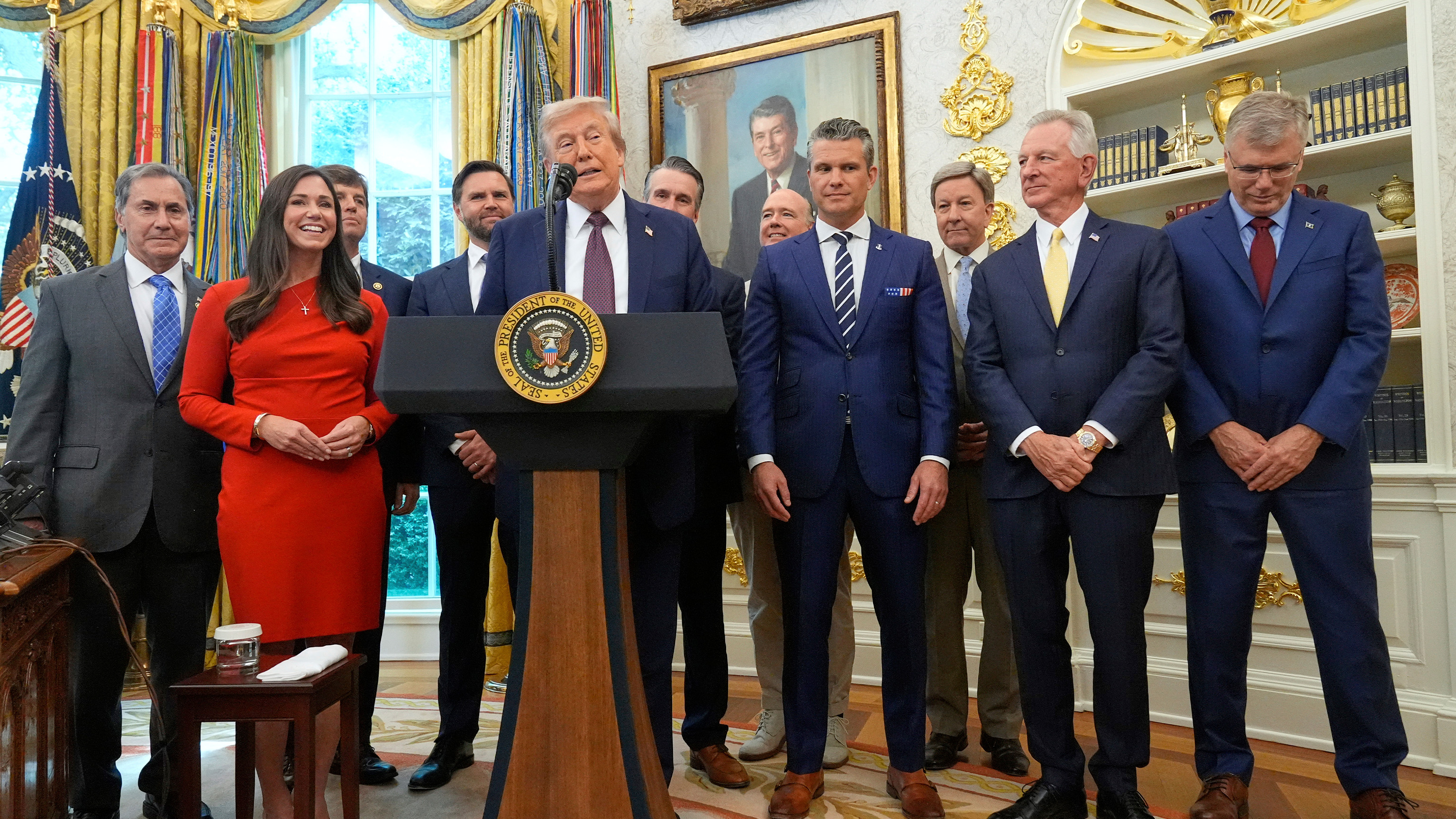
Donald Trump’s administration made a significant decision to relocate the U.S. Space Command headquarters to Alabama. This decision sparked considerable debate and discussion about its strategic and economic implications. The move was a surprise to many, as Colorado had long been considered the front-term favorite to retain the command.
The reasoning behind the relocation was complex, involving a mix of political, logistical, and economic considerations. The Space Command’s role is to oversee military operations in space, a domain that has become increasingly critical for national security. Its responsibilities include protecting U.S. and allied space assets, monitoring potential threats, and ensuring the freedom of operation in space. Therefore, the location of its headquarters is a matter of strategic importance.
The choice to relocate the headquarters from Colorado Springs to Huntsville, Alabama, elicited varied reactions. Proponents of the relocation, which included numerous Alabama politicians and business figures, celebrated it as a significant triumph for the state. They contended that Huntsville, often referred to as “Rocket City,” boasts a rich and notable history in the realms of aerospace and missile defense. The city hosts the Marshall Space Flight Center, a prominent NASA installation, as well as the Redstone Arsenal, a vital U.S. Army base. This pre-existing infrastructure, they argued, positions Huntsville as an ideal location for the Space Command. The claim was made that merging these essential aerospace and defense operations in a single place would generate strong synergy, improving efficiency and collaboration. Additionally, the move was perceived as a catalyst for Alabama’s economy, with promises of thousands of well-paying jobs and substantial investment in the area.
Nonetheless, critics of the decision expressed various worries. They highlighted the already developed infrastructure and the experienced workforce present in Colorado. Colorado Springs houses several major military sites, like Peterson Space Force Base, Schriever Space Force Base, and the U.S. Air Force Academy. They contended that the expenses associated with moving the entire command, along with personnel and resources, would be significant and could disrupt current activities.
There were also concerns that the move was politically motivated, as Alabama is a strongly Republican state. Critics suggested that the decision was a reward for political loyalty rather than a sound strategic choice. The potential for a loss of institutional knowledge and the challenge of retaining personnel during a transition were also major points of contention. The debate over the location highlighted the complex interplay between military strategy, economic development, and political influence.
The ultimate determination regarding the site for the U.S. Space Command headquarters carries significant consequences. For Alabama, it confirms the state’s status as a key center for aerospace and defense. The arrival of additional jobs and economic growth could revolutionize the Huntsville area, offering fresh opportunities for both businesses and locals. It represents a lasting commitment that might yield benefits for many years to come. For Colorado, the absence of the command represents a substantial setback.
While the state still has a strong presence in the aerospace and defense sectors, the relocation represents a missed opportunity and a potential setback. The broader implications of the move relate to the future of U.S. military strategy in space. The Space Command is at the forefront of a new era of military competition, with countries like China and Russia developing advanced anti-satellite weapons and other space-based capabilities. The effectiveness of the Space Command in this environment depends not only on its technology and personnel but also on its operational stability. Therefore, the transition to a new location must be managed carefully to ensure that it does not compromise national security.
The decision to move the U.S. Space Command to Alabama is a multifaceted issue that touches upon military strategy, economic policy, and political dynamics. While the supporters of the move emphasize the benefits of consolidating aerospace expertise in “Rocket City,” the critics raise valid points about the costs, disruptions, and potential political motivations behind the decision.
The ongoing debate underscores the high stakes involved in the new military and economic frontiers of space. The relocation of the headquarters is not merely a change of address; it is a strategic decision that will shape the future of U.S. military operations in space for years to come. The move represents a new chapter for both Alabama and the U.S. Space Force, with both opportunities and challenges ahead. The decision highlights how critical space has become, moving from a frontier for exploration to an arena for military and economic competition.
