
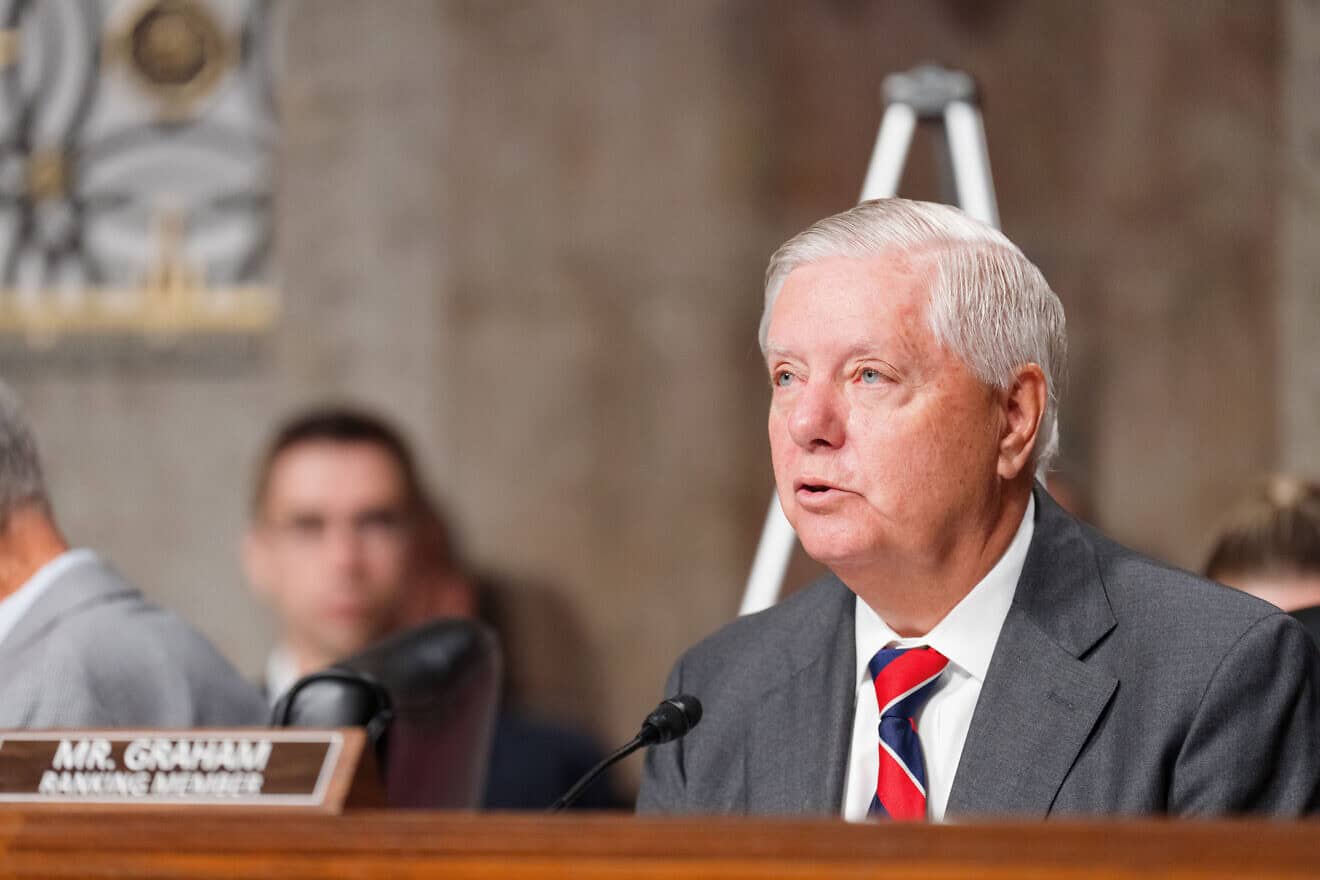
Senator Lindsey Graham has asserted that Israel cannot realistically reach a peace agreement with Hamas through diplomatic means. Instead, he emphasized that the only viable solution to the conflict is through military strength, arguing that Hamas is not a group that can be reasoned with at the negotiating table.
During a recent interview, Graham compared the situation to historical conflicts where military force preceded political reconstruction. He suggested that Israel may need to take full control of Gaza, eliminate Hamas’s influence, and only then begin the process of rebuilding the region with potential involvement from neighboring Arab nations. His comments reflect a broader sentiment among some policymakers who believe that force is the only effective response to Hamas’s ideology and tactics.
Graham highlighted the failure of recent efforts to negotiate a truce, observing that, in his opinion, Hamas has persistently demonstrated dishonest intentions. He believes that peace and safety are unattainable for Israel as long as Hamas continues to exist as a political and military force. He portrayed Hamas as inherently dedicated to Israel’s annihilation, rendering negotiation an impractical choice.
The senator’s remarks come at a time when Gaza is facing a growing humanitarian crisis. With widespread food shortages and deteriorating infrastructure, aid groups have called for immediate relief efforts. While some temporary pauses in hostilities have allowed limited humanitarian access, the broader situation remains critical. Despite these challenges, Graham maintains that military dominance is the first step toward eventual stability.
In a comparison to the time following World War II, Graham proposed that Israel could look into a strategy akin to the approach the Allied forces took with the occupation and rebuilding of Germany and Japan. According to him, a temporary military presence in Gaza might establish the circumstances needed for enduring peace, as long as there is a well-defined plan for political transition and collaboration in the region.
Graham’s stance is similar to those who strongly endorse Israel’s military operations. He has shown discontent with what he perceives as hold-ups and diplomatic complications, contending that extended talks merely strengthen Hamas. He thinks a conclusive military result could lead to a fresh political system in Gaza—one not dominated by radical groups.
Nevertheless, this perspective faces criticism. Numerous voices within the global community persist in advocating for a diplomatically reached resolution and warn about the repercussions of prolonged military involvement, especially for civilians trapped in the turmoil. Issues related to displacement, the breakdown of infrastructure, and enduring instability are pivotal in these debates.
Inside the United States, Graham’s position highlights an increasing split regarding strategies to address the conflict. Some legislators lean towards diplomatic solutions and stress humanitarian duties, whereas others, such as Graham, focus on military tactics as a method to neutralize threats and ensure peace by demonstrating strength.
His comments also illustrate a shift in U.S. foreign policy tone, where negotiation is increasingly seen by some as ineffective in conflicts involving non-state militant actors. For these leaders, military dominance followed by controlled reconstruction is considered a more pragmatic path.
Senator Lindsey Graham’s remarks highlight a firm viewpoint: engaging in dialogue with Hamas is not only ineffective but also possibly risky for Israel’s enduring safety. As the humanitarian situation worsens and global calls increase for a peaceful settlement, the discussion over methods to secure enduring peace in the area persists—juggling military needs with humanitarian issues and the intricacies of regional politics.
