
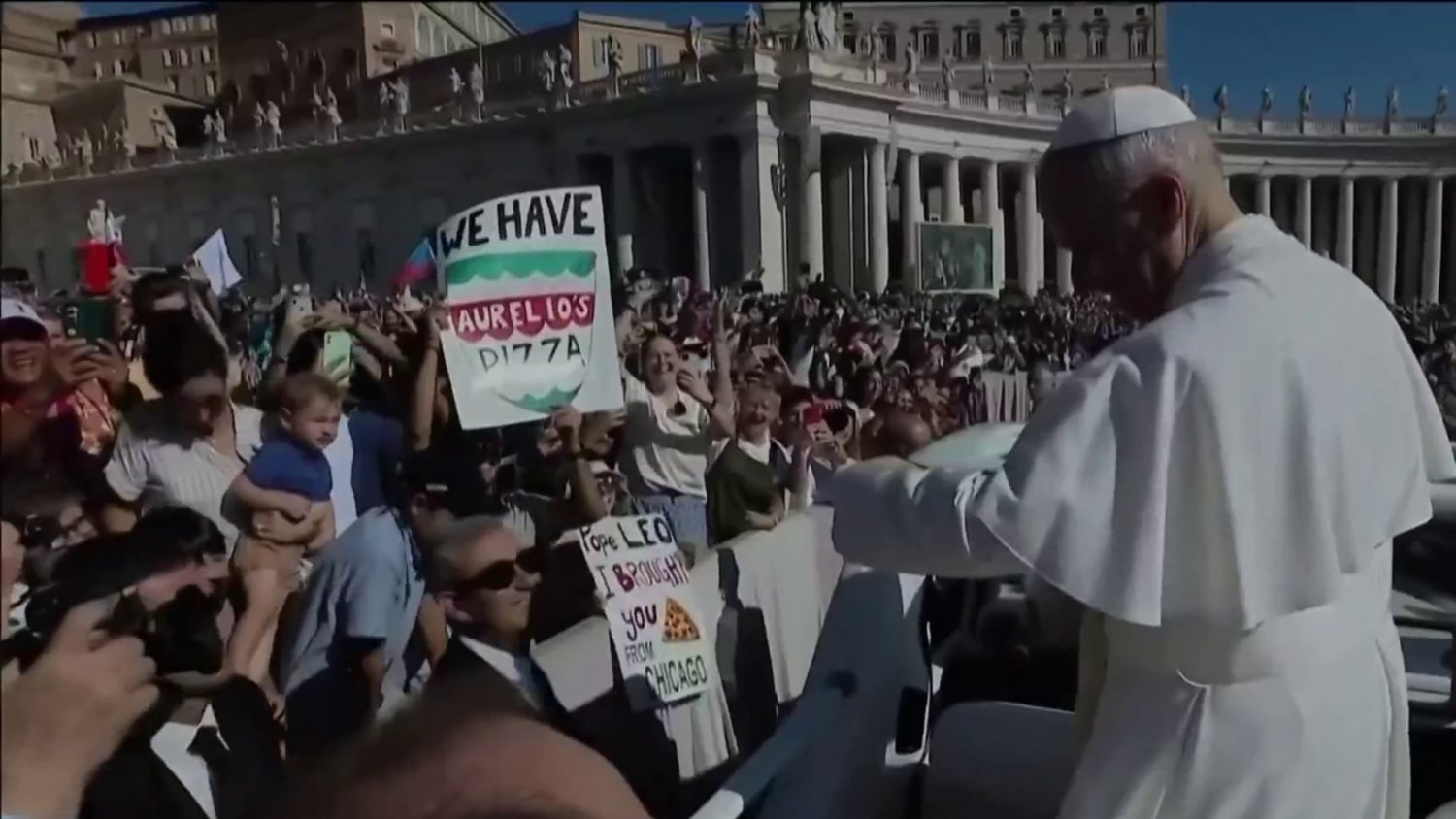
In an unexpected yet heartwarming gesture, Pope Francis recently received a delivery that brought a bit of Chicago to the heart of Vatican City — a box of authentic deep-dish pizza, carefully prepared and transported from the Windy City to the papal residence. While the Vatican is a place more commonly associated with centuries-old religious tradition than comfort food, the arrival of this special pizza sparked smiles and offered a brief, flavorful connection to the Pope’s fondness for simple pleasures.
Este especial envío fue más que un acontecimiento caprichoso. Resaltó un momento de intercambio cultural, recordando a muchos la duradera apreciación del Papa Francisco por la comida que refleja la alegría de la vida cotidiana. Conocido por su estilo de vida sencillo y su profunda conexión con las personas, el Papa ha hablado en varias ocasiones sobre su gusto por la pizza, incluso bromeando en el pasado diciendo que extrañaba la libertad de entrar a una pizzería local sin ser reconocido.
The pizza, reportedly handmade by chefs with ties to Chicago’s Italian-American culinary community, was carefully packed to preserve its heat and signature thick crust. Its arrival at the Vatican was orchestrated by admirers and benefactors who wanted to offer the Pope a familiar taste in a thoughtful and respectful way. Given that Pope Francis hails from Argentina, a country with a rich Italian immigrant history and deep culinary roots, the gesture resonated on multiple cultural levels.
This is not the first time food has served as a symbolic bridge for Pope Francis. Throughout his papacy, he has often referenced meals and cooking in his sermons and public addresses as metaphors for community, nourishment, and the importance of sharing. For example, he has drawn parallels between breaking bread and building unity, especially in a world that often feels fractured by division and inequality.
Upon graciously receiving the pizza, the Pope once more showcased his warm demeanor and his knack for finding happiness in life’s modest experiences. In contrast to grand ceremonies or formal diplomatic events, the delivery of a pizza at the Vatican drew attention for another reason: it served as a reminder of common humanity, even in the most hallowed places.
The Vatican press office did not issue an official statement regarding the pizza, but reports from those close to the event suggest that the Pope enjoyed it quietly, without fanfare. The delivery was handled with appropriate security protocols, and Vatican staff ensured the moment remained respectful and consistent with the dignity of the Holy See.
For numerous Catholics and watchers globally, this tale provided a cheerful contrast to the frequently weighty and intricate issues addressed within the Vatican. It served as a reminder that spiritual leaders, regardless of their esteem, remain human — and occasionally, a simple pizza slice can deliver a moment of solace and happiness.
The moment also invited conversation about how small gestures can hold deep meaning. In an age where global headlines are often dominated by conflict, political polarization, and economic uncertainty, stories like this one provide a refreshing perspective. They serve as a reminder that culture, kindness, and shared experiences still have the power to transcend borders — even the ancient stone walls of Vatican City.
Furthermore, the pizza delivery subtly illustrated the continuing bond between Italian-American communities and the Vatican. Chicago, in particular, has a strong Catholic heritage and a significant population that maintains deep spiritual and cultural connections with the Holy See. The gesture may also inspire similar efforts by faithful communities around the world to share their traditions with the Church in creative, respectful ways.
In many ways, this pizza story echoes Pope Francis’s broader philosophy: that faith is lived through acts of humility, joy, and connection. Whether advocating for the poor, urging environmental responsibility, or encouraging young people to engage with their communities, his approach has consistently focused on the relational and the real — and this simple act of sharing food fits seamlessly within that ethos.
While the pizza itself may now be gone, the story continues to spread across media and social platforms, celebrated not for its novelty alone, but for the warmth it inspired. It is a testament to the enduring human need for comfort, tradition, and the small delights that bind us together across continents and cultures.
In a world that often feels complicated and fragmented, the story of a Chicago-style pizza arriving at the Vatican stands out as a flavorful reminder that joy can be shared in the most unexpected ways — and sometimes, that joy is delivered in a cardboard box.
