
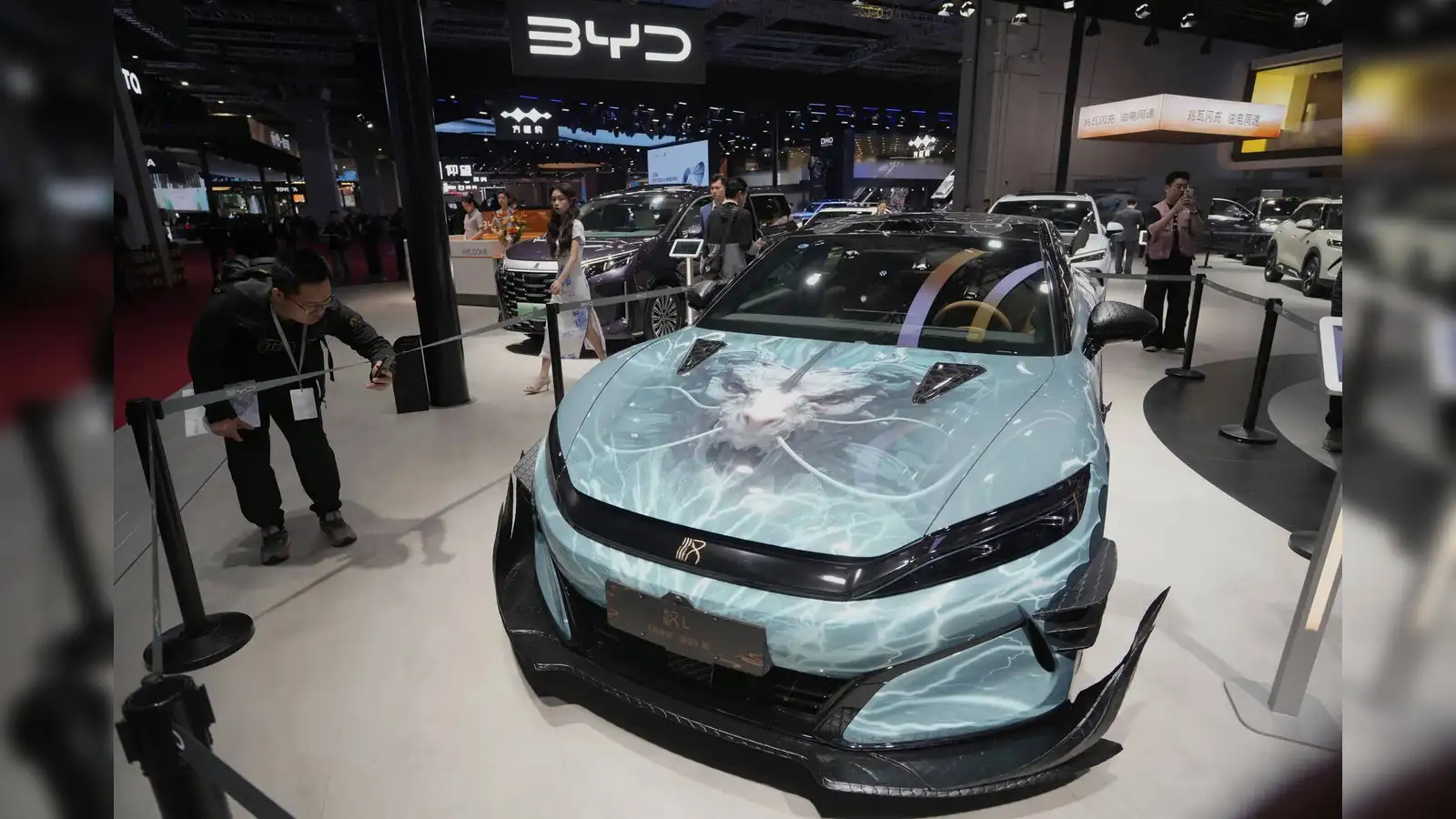
Manufacturers of Chinese electric vehicles are quickly expanding into global markets, but intense rivalry domestically endangers the existence of certain brands.
Over recent years, China has become a major force in the electric vehicle (EV) industry. The country’s producers have utilized cutting-edge technology, strong supply systems, and government support to lead national sales while aiming for worldwide growth. Prominent firms are now shipping their cars to Europe, North America, and Southeast Asia, indicating the emergence of Chinese EVs as formidable rivals in the global automobile arena. Nonetheless, the intense price battles happening in China’s home market present a notable obstacle, leading to concerns about the future viability of numerous brands.
World expansion and global aspirations
Chinese EV makers have decided not to limit themselves to only the domestic market. Companies like BYD, NIO, XPeng, and Li Auto are charting new territories in international markets. These brands are presenting themselves as budget-friendly options against well-known Western car manufacturers. By providing vehicles with advanced features at more competitive prices, they plan to appeal to budget-minded buyers and show that Chinese EVs match in terms of quality, safety, and innovation.
In Europe, for instance, Chinese EVs have started appearing in major cities, appealing to buyers with electric mobility incentives and environmentally conscious lifestyles. Meanwhile, in Southeast Asia and Latin America, manufacturers are tapping into emerging markets where demand for affordable, energy-efficient vehicles is growing. The global expansion reflects both strategic foresight and confidence in their technology, from battery performance to smart vehicle systems.
The international expansion also aids in broadening revenue channels. As domestic rivalry becomes more intense, going global enables manufacturers to alleviate some of the pressure on their profit margins experienced locally. By tapping into markets where electric vehicles are still in their infancy, Chinese brands can establish awareness and customer allegiance ahead of heightened global competition.
Conflicts over domestic pricing and unification of the market
Although expansion abroad seems encouraging, the domestic landscape poses a tougher test. The Chinese electric vehicle sector is marked by fierce rivalry, with numerous brands providing comparable models at progressively lower prices. This situation has led to a “race to the bottom” condition, where maintaining profit margins is continually challenging, and smaller or newer brands face the threat of being completely pushed out.
Government subsidies have historically played a role in promoting EV adoption in China, but changes in policy and the gradual reduction of incentives have intensified price competition. Many manufacturers now rely on high-volume sales to maintain profitability, but the market is reaching saturation in some urban centers. Companies that cannot maintain scale or differentiate their products face financial strain, leading to closures, mergers, or acquisitions.
The outcome is likely to be a wave of consolidation, with stronger brands absorbing weaker rivals or some exiting the market entirely. While this may reduce domestic choice for consumers, it could ultimately strengthen the most competitive players, who can then leverage their position for international expansion.
Technological innovation as a survival strategy
In a market characterized by intense price competition, advances in technology have emerged as a significant factor that sets companies apart. Businesses that focus on developing battery technology, self-driving systems, and intelligent connectivity capabilities are more likely to withstand local and international competitive forces. Buyers are now looking at factors beyond just cost when selecting an electric vehicle, such as range, safety, software compatibility, and design, indicating that brands cannot depend solely on reduced prices to retain their share of the market.
Battery effectiveness, specifically, is an essential area of competition. Producers in China have achieved notable progress in crafting high-capacity batteries with extended life, quicker charging times, and enhanced safety measures. By combining these improvements with attractive pricing, firms can offer persuasive value propositions that attract both local and global consumers.
Furthermore, intelligent vehicle technology—such as AI-powered driving, digital dashboards, and connectivity services—is increasingly a core selling feature. Companies that provide a smooth blend of hardware and software tend to retain customer allegiance and resist market competition. Thus, innovation in technology serves a dual role: safeguarding profits locally while expanding into international markets.
Geopolitical and trade considerations
The global expansion of Chinese EVs is not without challenges. Geopolitical tensions, trade restrictions, and regulatory differences can complicate market entry, requiring companies to navigate complex legal frameworks and import standards. For instance, entering the European Union or U.S. markets involves compliance with stringent safety and environmental regulations, intellectual property protections, and localized customer expectations.
Trade conflicts could influence pricing approaches and earnings. Tariffs or other trade obstacles might lower the cost benefit that Chinese EVs have compared to domestic rivals. As a result, certain manufacturers are considering local production or partnerships to lessen these threats, further highlighting the flexibility of China’s EV sector.
However challenging the situation might be, there are substantial possibilities in the worldwide demand for electric mobility. As environmental regulations encourage the shift towards cleaner energy and consumer interest in eco-friendly transport increases, Chinese EV brands are strategically placed to capture market share internationally—provided they sustain financial and technological advantages domestically.
Transforming the concept of electric cars
The trajectory of Chinese EVs illustrates both promise and peril. On one hand, the international expansion underscores the potential of Chinese automakers to redefine the global automotive industry, bringing affordable, technologically advanced vehicles to new markets. On the other hand, the domestic price war serves as a reminder that success abroad depends on resilience and profitability at home.
Firms capable of merging creativity, operational excellence, and strategic cost-setting are expected to flourish, whereas less robust competitors might vanish from the industry. This process of natural elimination could eventually fortify the field, enabling Chinese brands to compete based on quality and dependability instead of just pricing.
As growth in the global EV sector persists, the balance between local demands and worldwide goals will influence the trajectory of China’s electric vehicle industry. It is crucial for investors, buyers, and decision-makers to comprehend this interaction to predict the potential gains and challenges in one of the fastest-changing fields globally.
The growth of Chinese electric vehicles signifies a more extensive transformation in worldwide automotive influence. Although the path forward is filled with obstacles—ranging from competitive pricing to international trade disagreements—the industry’s capacity for innovation and adaptation implies that Chinese companies are not merely involved in the electric transition—they are playing a pivotal role in shaping it.
