
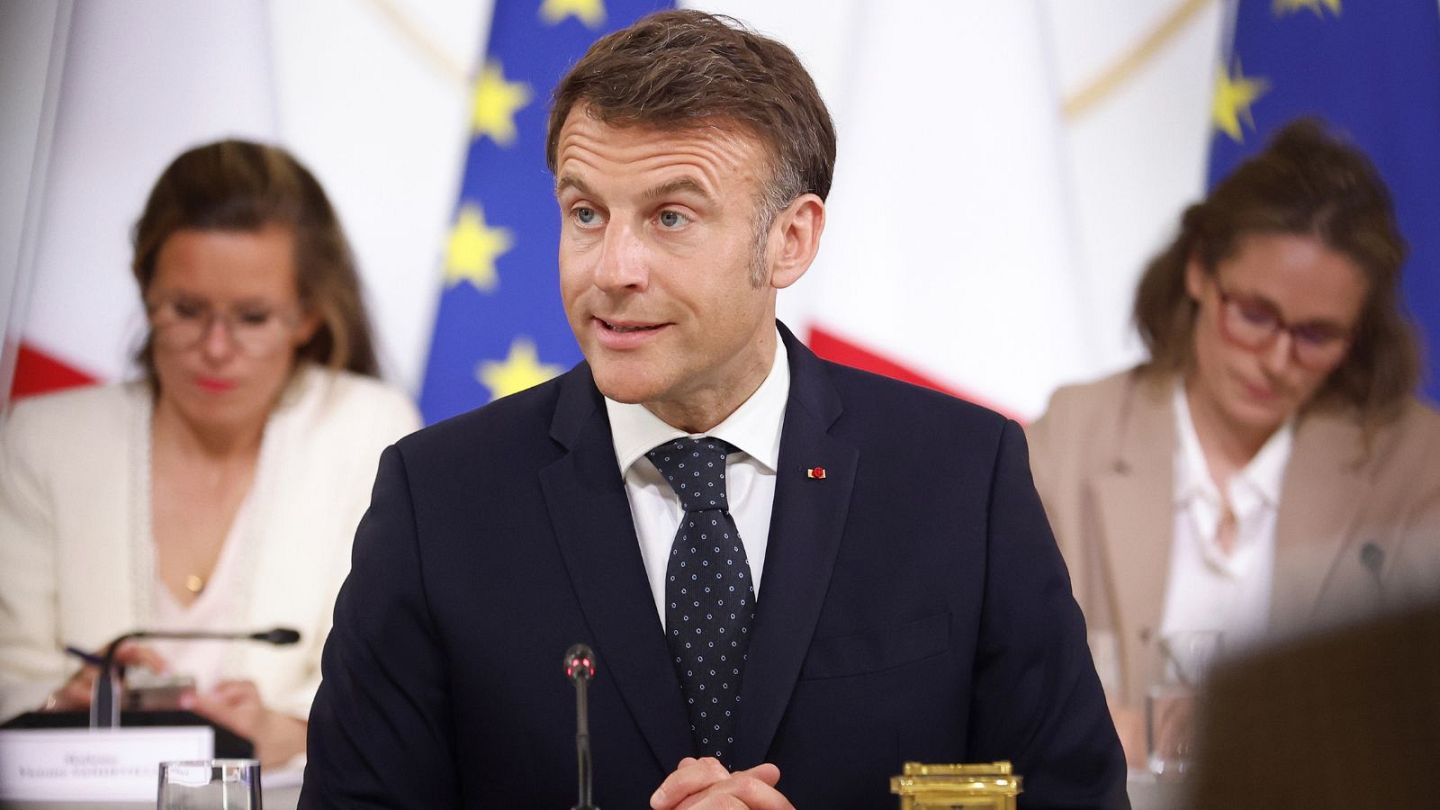
French President Emmanuel Macron has declared his country’s intent to recognize the State of Palestine, aligning France with a growing international movement that supports Palestinian sovereignty. The announcement reflects a broader shift in global diplomacy, as pressure builds on world leaders to address the longstanding Israeli-Palestinian conflict with renewed urgency.
Macron’s remarks provide some of the strongest evidence so far that France might soon align with other European and Global South countries in formally recognizing Palestine as an independent nation. While no exact schedule was offered, Macron’s declaration indicates that the question is not “if” but “when” France will grant recognition.
For decades, France has maintained a delicate balance in its Middle East policy, backing Israel’s right to security while simultaneously supporting the Palestinians’ right to self-determination. Macron’s latest remarks hint at a departure from mere diplomatic neutrality, signaling a possible recalibration of France’s stance in response to mounting frustration over stalled peace negotiations and worsening humanitarian conditions in the Palestinian territories.
Macron emphasized that recognition should not be seen as an act against Israel, but rather as a step toward a durable, two-state solution that offers peace and dignity to both Israelis and Palestinians. He argued that acknowledging Palestine as a state might help restart dialogue and offer Palestinians the legitimacy they need to engage more effectively in peace efforts.
France’s position comes amid a growing wave of recognitions and symbolic gestures from countries across Europe and beyond. Several governments have either already recognized Palestine or expressed intentions to do so, citing concerns over the continued expansion of Israeli settlements, recurring violence, and the lack of progress in bilateral negotiations.
The initiative gained considerable traction in 2024, when various European countries, such as Spain, Ireland, and Norway, undertook official actions to acknowledge the Palestinian state. These actions were motivated by public opinion, legislative proposals, and a pressing necessity to tackle the humanitarian situation in Gaza and the West Bank.
France’s entry into this group would mark a pivotal moment, given its status as a major power within the European Union and its longstanding diplomatic ties in the region. As a permanent member of the United Nations Security Council, France’s voice carries weight in shaping international discourse and policy.
Macron’s declaration may also have domestic political implications. France is home to both a significant Jewish population and one of the largest Muslim communities in Europe. Navigating tensions between these groups while maintaining a consistent foreign policy has long been a challenge for French leaders.
The leader cautiously presented the acknowledgment of Palestine as part of a wider dedication to peace and stability in the region. He restated France’s denouncement of terrorist activities and confirmed backing for Israel’s right to exist with protected boundaries. Concurrently, he showed support for the Palestinian population and urged a halt to the violence that has affected generations.
By emphasizing France’s position as an impartial mediator, Macron aims to portray the choice as based on fairness, human rights, and enduring peace instead of political self-interest.
Even though recognition holds symbolic significance, its practical outcomes are unclear. A coherent Palestinian government has yet to emerge, with significant internal rifts—especially between the Palestinian Authority in the West Bank and Hamas in Gaza—hindering diplomatic interactions. Furthermore, Israeli authorities have continually resisted international recognition of Palestine without direct talks, considering these efforts unilateral and ineffective.
Macron recognized these challenges but believed that France’s acknowledgment could trigger the resumption of discussions. He called on both parties to come back to negotiations and highlighted the importance of global backing, including contributions from regional actors, to ensure safety and economic growth for everyone concerned.
Responses to Macron’s declaration have varied. Palestinian representatives appreciated the comments, interpreting them as an indication of increasing worldwide backing for their cause. On the other hand, Israeli officials voiced worry, claiming that global acknowledgment without dialogue weakens the peace efforts and strengthens radical groups.
In international circles, France’s potential recognition is expected to accelerate discussions among other undecided nations. Some countries, especially within the European Union, have been hesitant to act unilaterally, preferring a coordinated approach. France’s move may now serve as a model or precedent, breaking diplomatic inertia and influencing policy decisions in other capitals.
Macron did not set a firm date for the official recognition but suggested that it could be tied to developments on the ground. He indicated that any recognition would be part of a broader diplomatic package aimed at promoting coexistence, economic cooperation, and regional integration.
The potential recognition of Palestine by France could signal a turning point in the Middle East peace process, depending on how it is received and acted upon by other major powers. If France proceeds, it would join over 130 countries around the world that already recognize Palestinian statehood—a number that continues to grow as geopolitical dynamics shift.
Critics claim that acknowledging symbolic status without concrete steps towards peace could result in increased disillusionment. Proponents respond by stating that such recognition validates Palestinians’ right to nationhood and balances the diplomatic landscape, ensuring that future discussions are fairer.
As France approaches official acknowledgment, its choice is expected to have an impact well beyond its own territory. It remains uncertain if this action will assist in ending the protracted conflict, but it unquestionably alters the discourse regarding sovereignty, justice, and the function of international diplomacy in settling one of the globe’s most persistent disagreements.
