
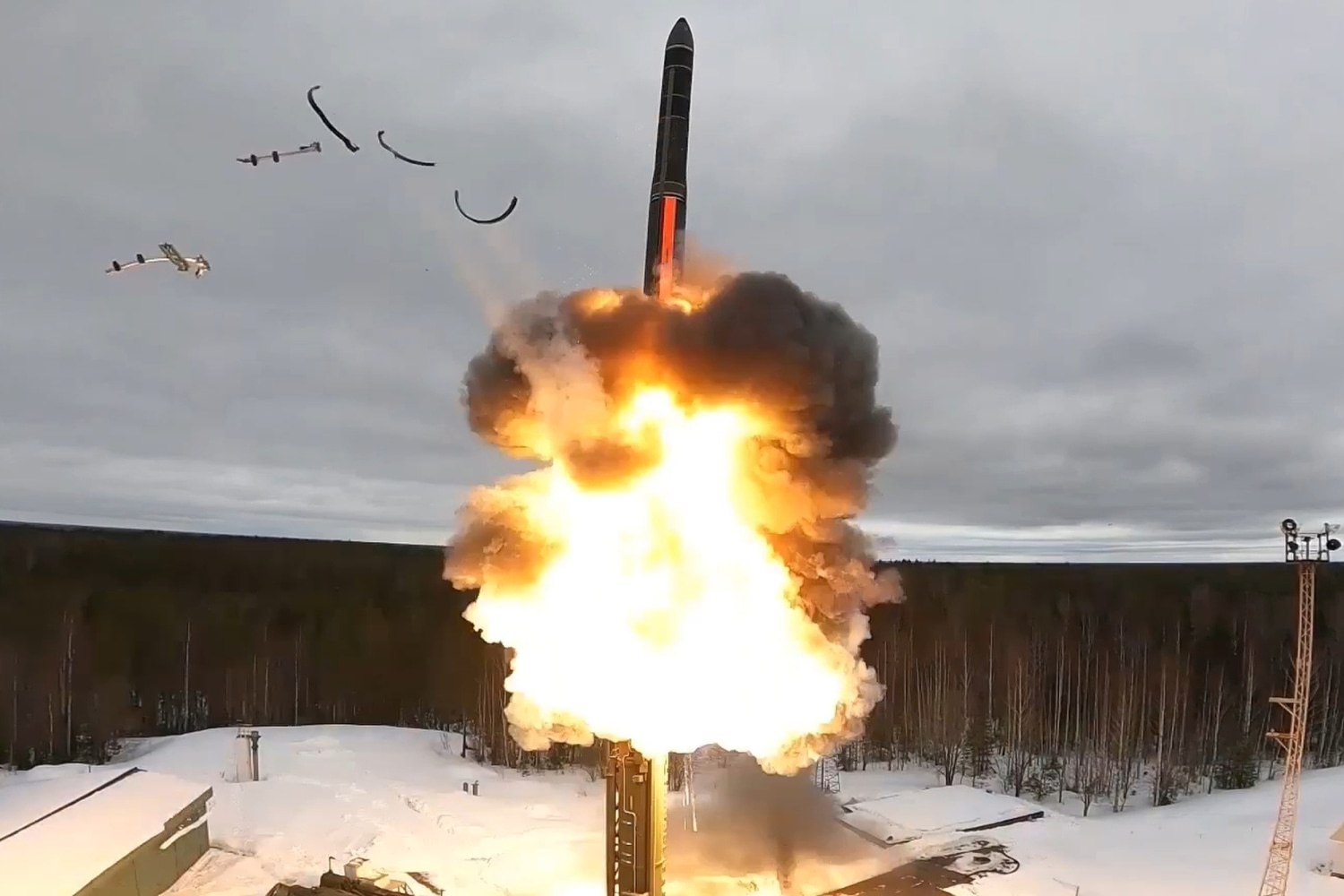
The ex-leader of Russia has sent a bold message to foreign rivals after Moscow’s recent choice to withdraw from a crucial nuclear weapons treaty. This action indicates a major change in worldwide security relations, highlighting increased hostilities and moving away from long-established arms control agreements created during the Cold War and the years following it.
The treaty in question, widely regarded as a cornerstone of nuclear stability between major powers, had placed limits on the deployment and development of certain classes of nuclear weapons. Its suspension and eventual termination mark a critical escalation in the arms race, raising concerns among global leaders about the potential for renewed strategic rivalry and diminished avenues for diplomatic dialogue.
In his statement, the former Russian leader emphasized that the Kremlin’s withdrawal reflects a “new reality” in international relations, one characterized by a recalibration of military doctrines and geopolitical priorities. He framed this shift as a response to perceived threats and provocations from rival nations, asserting that Russia must adapt to an evolving security environment to safeguard its national interests.
This announcement has drawn attention to the broader context of deteriorating relations between Russia and Western countries, marked by mutual accusations of treaty violations, military buildups, and sanctions. The collapse of arms control agreements not only undermines decades of efforts to reduce nuclear risks but also fuels uncertainties about future conflict prevention mechanisms.
Experts express concern that without strong arms control agreements, the likelihood of errors in judgment, miscommunication, and intensification increases significantly. A lack of clear verification processes might lead to unchecked advancement of sophisticated weaponry, such as hypersonic missiles and tactical nuclear arms, making crisis management more complicated.
The Kremlin’s decision reflects Moscow’s strategic calculation amid complex security challenges, including NATO’s eastward expansion and shifting alliances in Eastern Europe and beyond. Russian officials have cited concerns about the treaty’s relevance and fairness, arguing that it constrains their defensive capabilities while adversaries pursue technologies outside its scope.
The global community has reacted with a blend of disapproval and appeals for revived conversation. Diplomatic initiatives are in progress to avert further destabilization of arms control structures, with certain countries urging for comprehensive talks that address rising dangers and novel weapon types.
Meanwhile, defense analysts are closely monitoring Russia’s military posture and technological developments, assessing the implications for regional and global stability. The prospect of a more confrontational security environment has prompted discussions on deterrence strategies, arms modernization, and the role of multilateral institutions.
Esta situación en desarrollo subraya la naturaleza vulnerable del control de armas mundial en una época caracterizada por la competencia geopolítica y los avances tecnológicos. Las declaraciones del ex presidente ruso muestran cómo el discurso de los líderes puede afectar las percepciones y posiblemente determinar la dirección de la seguridad internacional.
As the world navigates this “new reality,” stakeholders face the challenge of balancing national security interests with the urgent need to prevent nuclear escalation. Strengthening communication channels, rebuilding trust, and pursuing arms control adaptations suited to contemporary challenges will be critical to maintaining strategic stability.
The breakdown of this nuclear treaty serves as a reminder of the interconnectedness of diplomacy, military policy, and international law in managing weapons of mass destruction. It also raises questions about the future of global nonproliferation efforts and the capacity of existing institutions to address emerging risks.
In the coming months, attention will focus on whether Russia’s departure from the treaty prompts reciprocal actions or new initiatives aimed at conflict reduction. The situation calls for measured responses and proactive engagement to avoid unintended consequences that could destabilize an already fragile security landscape.
The remarks by Russia’s previous president and the change in the Kremlin’s strategy signify a crucial point in the history of nuclear arms regulation. The way the global community reacts will significantly influence the future of peace and security in an evolving global landscape.
