
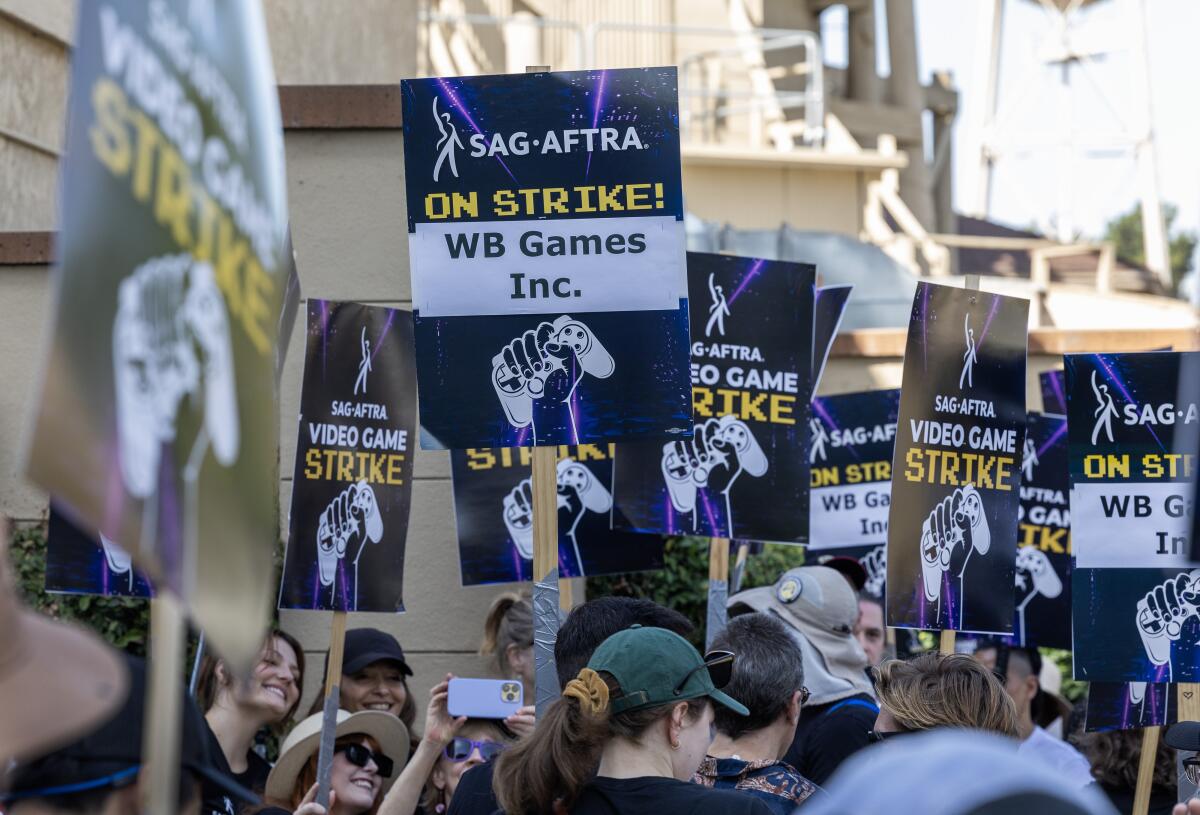
The dispute involving voice actors in the video game sector has concluded, resulting in a crucial agreement that deals with the increasing presence of artificial intelligence (AI) in the gaming world. After months of dialogue and discussions across the industry, the union of actors and video game firms have come to an agreement establishing new guidelines for the employment of AI tech in artistic performances, allowing the sector to progress while ensuring the protection of human performers’ rights and input.
The strike, which drew widespread attention within the gaming community and entertainment sector, was primarily centered on concerns about how AI could be used to replicate or replace human voices, potentially undermining the work of professional actors. As AI technology continues to evolve rapidly, the fear among performers was that studios might begin using synthetic voices or digital replicas without proper consent, compensation, or creative input from the original artists.
Voice acting is a crucial component of modern video games, bringing characters to life, enriching storytelling, and enhancing the immersive quality of gameplay. From blockbuster franchises to indie titles, the human touch provided by voice actors adds emotional depth and authenticity that players around the world have come to expect. As AI-generated voices become increasingly sophisticated, many performers raised the alarm over the potential erosion of artistic integrity and fair labor practices in the industry.
The recently established accord lays out distinct directives regarding the application of AI, guaranteeing that voice performers retain authority over their work and image. A key element of the arrangement is the stipulation that organizations need to receive explicit permission from actors prior to utilizing AI for replicating or altering their voices. Furthermore, the agreement incorporates terms for equitable remuneration when AI is used in scenarios involving actors’ digital images or voice characteristics.
This significant advancement follows extensive discussions between the actors’ union—which advocates for numerous performers in video games, movies, and television—and leading gaming studios that produce many of the most popular titles in the industry. Each party recognized the transformative nature of AI while highlighting the importance of balancing technological progress with the appreciation of human skill.
The contract additionally tackles wider labor issues that arose throughout the strike. Matters including working environments, vocal fatigue, session durations, and compensation structures for voice performers were included in the talks. The finalized agreement provides enhancements in these sectors as well, indicating the industry’s increasing acknowledgment of the physical and emotional pressures on performers.
For numerous actors, the decision represents not only a triumph for their field but also a significant step for the responsible implementation of AI in the arts. Concerns about being digitally replaced or having their voice replicated without permission had caused unease among artists committed to their craft. This accord reinforces the idea that technology should be leveraged to augment human creativity, not to replace it.
The video game industry has been at the forefront of technological innovation for decades, pioneering advances in graphics, storytelling, and interactive experiences. AI, in particular, has already been integrated into various aspects of game development, including non-player character behavior, procedural content generation, and adaptive difficulty systems. However, the extension of AI into voice acting raised ethical questions that could no longer be ignored.
The walkout also underscored the wider dialogue happening within the entertainment industries, such as film, television, and music, where AI-generated materials are becoming more common. Worries about the improper use of digital representations, deepfakes, and artificial voices are causing creators and unions to seek enhanced safeguards and more explicit regulations.
The new guidelines for AI use in video games may serve as a model for other industries grappling with similar challenges. By establishing a consent-based framework, the agreement acknowledges that while AI offers exciting possibilities for innovation, it must be implemented in ways that respect the rights and contributions of individual artists.
From the viewpoint of gaming firms, the agreement offers essential clarification and allows for ongoing progress in technology without risking the rapport with the skilled individuals who make games unforgettable. For a long time, studios have depended on the unique voices and performances of actors to establish emotional bonds with players, and preserving that human aspect continues to be a top concern for many developers.
The conclusion of the strike also brings relief to fans and game developers who had faced uncertainty over potential delays and disruptions to upcoming projects. With production schedules back on track, players can look forward to the release of highly anticipated titles that were temporarily impacted by the work stoppage.
Looking forward, the convergence of AI and artistic performance is expected to keep advancing. The gaming sector’s proactive measures to tackle these challenges establish a significant example, showcasing the possibility of utilizing emerging technologies while protecting creative expression and workers’ rights.
The actors’ union has indicated that it will remain vigilant as AI capabilities continue to advance, recognizing that ongoing dialogue and periodic contract updates will be necessary to keep pace with technological change. This collaborative approach reflects a broader shift within the entertainment world, where creators, technologists, and labor advocates are increasingly working together to ensure that innovation proceeds in an ethical and equitable manner.
Beyond voice acting, the agreement may also influence discussions around motion capture, digital avatars, and other forms of performance in gaming and virtual environments. As immersive technologies such as virtual reality and augmented reality become more mainstream, the role of actors in shaping digital experiences is likely to grow, making it essential to establish strong protections now.
La solución al conflicto de los actores de videojuegos proporciona un ejemplo alentador de cómo las industrias pueden enfrentar los desafíos de la rápida transformación tecnológica, mientras mantienen valores fundamentales como la equidad, el consentimiento y la creatividad. Al reconocer la contribución insustituible de los intérpretes humanos y establecer límites cuidadosos en el uso de la inteligencia artificial, la industria de los videojuegos está avanzando de manera significativa hacia un futuro donde la tecnología y el arte conviven de manera armoniosa.
As gaming continues to broaden its cultural influence and economic scope, the voices behind the characters—both in literal and figurative terms—remain central to the experience. This agreement guarantees that these voices will be acknowledged, valued, and safeguarded as the industry moves forward into its next phase of innovation.
