

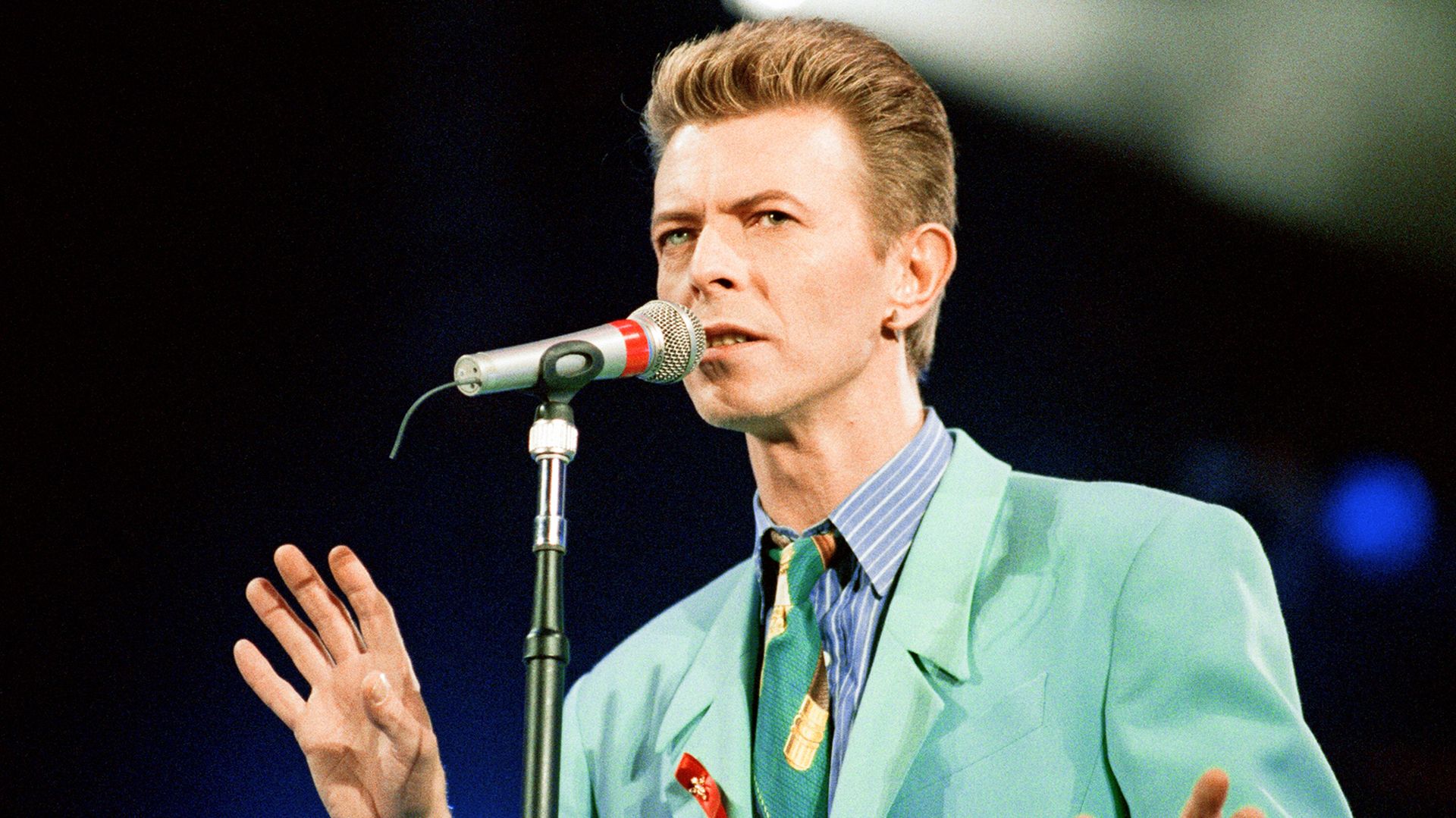
David Bowie’s name remains synonymous with reinvention, artistry, and a fearless approach to creativity. Throughout his career, the iconic musician constantly challenged the limits of sound, style, and performance, shaping not just the music industry but modern culture as a whole. Even after his death in 2016, Bowie’s influence continues to echo across generations, inspiring musicians, visual artists, filmmakers, and fans around the globe.
At this moment, a new segment in his narrative has unfolded. Recent announcements verify the finding of a previously undiscovered project concealed in Bowie’s private study, remaining sealed and unexplored for a long time. This discovery has ignited fervent conjecture, as fans and researchers attempt to envision what this ultimate creative endeavor might disclose about the psyche of one of music’s most mysterious personalities.
The find occurred during an extensive archival process aimed at cataloging and preserving Bowie’s vast collection of artistic materials. His archives contain decades of notebooks, lyric sheets, stage designs, and experimental works — a treasure trove that reflects the restless curiosity that defined his life. Among these materials, archivists encountered a collection that stood apart: documents and recordings suggesting the blueprint for an ambitious project Bowie never shared with the public.
Although precise information is limited, initial accounts suggest it’s more than merely a collection of tunes. Those knowledgeable about the collection indicate it might integrate components of music, narrative, and visual artistry—a complex idea in line with Bowie’s penchant for merging various forms. From The Rise and Fall of Ziggy Stardust to Blackstar, his last album, Bowie frequently approached his creations as cohesive storytelling experiences rather than individual pieces. This clandestine project seems to adhere to that same principle.
The exact moment of the project’s inception is uncertain, but numerous individuals suggest it may trace back to Bowie’s last years, alongside his work on Blackstar. Debuting in January 2016, merely two days prior to his passing, Blackstar was a poignant goodbye, rich with enigmatic allusions and daring musical exploration. Should the recently unearthed piece originate from this timeframe, it might provide significant understanding into Bowie’s creative mindset as he pondered over his own mortality and legacy.
What makes this revelation so compelling is not just the existence of new Bowie material but what it symbolizes. For an artist celebrated for constant evolution, this hidden creation underscores his lifelong commitment to pushing boundaries, even in his final days. Bowie never stood still. Each reinvention — from glam rock alien Ziggy Stardust to the Berlin-era experimentalist to the elegant Thin White Duke — reflected a refusal to settle. This newly uncovered project suggests that his spirit of innovation endured until the very end.
As news of the discovery circulates, questions arise regarding the future of these materials. Should the work be completed and released to the public? Or should it remain private, preserving the mystery Bowie so often embraced? These ethical considerations are not new in the music industry. Posthumous releases frequently spark debate about artistic intent, and Bowie, known for meticulous control over his image and output, may never have intended this project to surface.
Representatives from Bowie’s estate have chosen to stay silent, stressing that all choices will focus on honoring the artist’s legacy. Meanwhile, fans have turned to social platforms to express their aspirations and worries. Some hope for the release of Bowie’s final work, while others are concerned that commercialization might eclipse genuine artistry.
The revelation further highlights the extent to which Bowie’s creative genius surpassed music. His impact reached into the realms of cinema, clothing trends, and visual artistry, with every period marked by a fresh style and conceptual framework. This concluding undertaking, regardless of its format, might symbolize yet another daring declaration from an artist who continuously amazed the world.
Historians and cultural analysts propose that even if this piece is never entirely revealed, its mere presence contributes to the story of Bowie as a pioneering figure until his very last moment. In a time when numerous artists repeat established patterns, Bowie stayed unsettled, inquisitive, and daring — traits that still motivate future generations of artists.
Currently, the materials within this concealed collection are being thoroughly examined. Regardless of whether these documents will be disclosed or remain confidential, they stand as a strong testament to Bowie’s lasting influence and his defiance of conventional norms. His legacy never centered on closure; it focused on change — and even in passing, that essence persists.
David Bowie once said, “I don’t know where I’m going from here, but I promise it won’t be boring.” True to his word, his story continues to evolve in ways no one could have predicted. This latest revelation proves that the journey of understanding Bowie is far from over — and the world is eager for whatever truths this hidden work may hold.
