

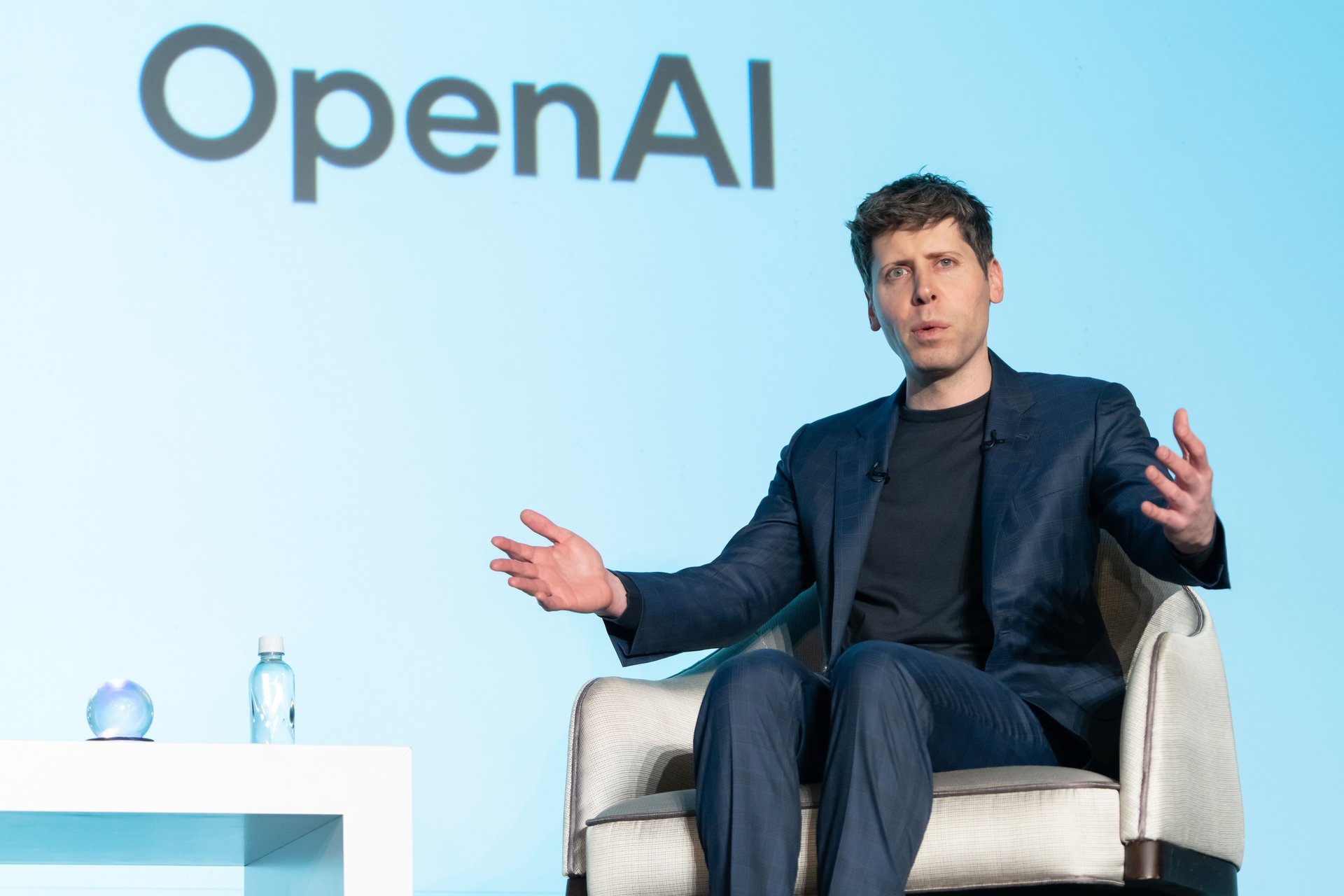
Artificial intelligence is now a hot topic, capturing an extraordinary level of interest from investors, governments, and businesses. However, despite the growing excitement, OpenAI’s CEO, Sam Altman, has warned that the industry might be approaching what he terms a bubble. His remarks come during a period when massive amounts of money are being funneled into research, infrastructure, and new ventures, creating both chances and worries about whether this fast growth can be maintained.
According to Altman, the vast volume of financial investments in artificial intelligence reflects historical trends of speculative overinvestment. Although he recognizes the technology’s transformative potential, he also proposes that the speed of capital inflow might not always coincide with practical timelines for returns. The concern, he elaborates, is not that AI will fail, but that lofty expectations could lead to market instability if immediate outcomes don’t meet the significant hype.
That feeling isn’t unfamiliar within the technology sector. Past periods have experienced comparable waves of enthusiasm, like the dot-com bubble of the late 1990s, when internet-focused enterprises attracted significant investment before the market ultimately stabilized. According to Altman, today’s atmosphere mirrors those previous times, with businesses of every size hastening to establish their role in what numerous people call a technological transformation.
The growth of artificial intelligence has been largely driven by advancements in generative AI, featuring systems that can produce text, images, audio, and even video similar to those created by humans. Companies in various sectors—ranging from healthcare to finance to entertainment—are investigating how these technologies can optimize processes, enhance customer experiences, and open up new creative possibilities. Nonetheless, the rapid development of these systems has increased the urgency for businesses to make significant investments, frequently without a defined plan for making a profit.
Another reason contributing to this increase is the rising need for specialized computing facilities. Training extensive AI models necessitates the use of powerful graphics processing units (GPUs) and sophisticated data centers that can manage substantial computational workloads. Firms that provide these technologies, especially chip producers, have experienced a significant rise in their market valuations as companies rush to acquire scarce hardware assets. Although this demand underscores the significance of essential infrastructure, it also prompts concerns about long-term viability and possible market disparities.
Altman’s comments arise in the context of intensified rivalry among top technology companies. Key industry leaders, including Google, Microsoft, Amazon, and Meta, are striving to enhance their AI capabilities by investing heavily in research and development. For these companies, artificial intelligence goes beyond being a mere product feature; it is a crucial aspect of their future business strategies. This competitive environment speeds up investment processes, as no firm wishes to appear as falling behind.
While the influx of capital has accelerated innovation, critics warn that the intensity of spending risks overshadowing the need for careful governance and regulation. Policymakers worldwide are grappling with how to manage the rapid adoption of AI while protecting societies from unintended consequences. Issues such as data privacy, job displacement, misinformation, and algorithmic bias remain at the forefront of the debate. If a bubble does form, the fallout could extend beyond financial markets, shaping how societies trust and use artificial intelligence technologies in everyday life.
Altman himself stays cautiously hopeful. He has consistently voiced his confidence in the long-term advantages of AI, portraying it as one of the most significant technological transformations humanity has encountered. His worry is less about the development path of the technology itself and more about the immediate disruptions that might arise from conflicting motivations and unsustainable financial speculation. In his opinion, distinguishing true innovation from hype is crucial to ensure the field advances in a responsible manner.
One of the challenges in identifying a potential bubble is the difficulty of measuring value in a technology that is still evolving. Many AI applications are in their infancy, and their true economic impact may take years to fully materialize. Meanwhile, valuations of startups are being driven by potential rather than proven business models. Investors who expect immediate returns could be disappointed, leading to abrupt corrections that destabilize the market.
History provides important insights into where excitement about technology can exceed practical limits. The dot-com crash illustrates that although numerous businesses did not succeed, the internet kept expanding and ultimately altered every facet of contemporary life. Likewise, even if the AI industry faces a phase of recalibration, the enduring development of the technology is expected to stay on course. For Altman and his peers, the main focus is to brace for the unpredictability instead of overlooking the cautionary signals.
The conversation about a potential AI bubble also touches on broader questions about innovation cycles. Each wave of technological progress tends to attract both visionaries and opportunists, with some companies building lasting solutions while others pursue short-term gains. Sorting between the two is difficult in the heat of rapid investment, which is why experts urge investors and policymakers alike to approach the space with both enthusiasm and caution.
What is evident is that artificial intelligence is here to stay. Regardless of whether the market experiences an adjustment or maintains its rapid growth, AI will persist as a key component of the worldwide economy and society overall. The task is to handle the excitement surrounding it in a manner that enhances advantages while reducing potential dangers. Altman’s cautionary message serves more as a prompt for careful interaction with a technology that is rapidly transforming the future rather than a forecast of downfall.
As businesses and governments weigh their next moves, the tension between opportunity and caution will continue to define the AI landscape. The decisions made today will influence not only the financial health of companies but also the ethical and social frameworks that govern how artificial intelligence is integrated into daily life. For stakeholders across the spectrum, the lesson is clear: enthusiasm must be tempered by foresight if the industry hopes to avoid repeating the mistakes of past technological booms.
Sam Altman’s warning highlights the delicate balance between innovation and speculation. Artificial intelligence holds extraordinary promise, but the path forward requires careful navigation to ensure that investment, regulation, and adoption evolve in harmony. Whether the sector is truly in a bubble or simply experiencing growing pains, the coming years will be pivotal in determining how AI reshapes economies, industries, and societies around the world.
